
Flooded Air Conditioner in Florida
What to do before you turn it back on
Quick Answer: If floodwater reached your outdoor AC unit, leave it off, even after the water goes down and the unit looks fine. Moisture, mud and corrosion can sit inside the electrical parts where you can't see them.
Rocket Cooling Recommendation: Keep the thermostat and AC breakers off, photograph the waterline for your insurance, and have a licensed technician inspect the system before it runs again. Heavy rain on its own isn't a problem. Rising water is.

Florida storms bring a lot of rain, and your outdoor AC unit is built to handle it. Getting wet isn't the problem. The real concern is rising floodwater that reaches the electrical parts inside your system.
This guide covers what to do when water is getting close to your AC, what to do after it goes down, and why a flooded unit should never be restarted until a licensed technician checks it.
Rain Is Normal. Rising Water Isn't.
Outdoor AC units sit outside year-round and are designed for heavy rain, wind-driven water and humidity. You don't need to turn your system off just because it's raining hard.
Floodwater is different. When water rises up into the unit from below, it can reach:
- Electrical connections and the control board
- The compressor's electrical terminals
- The fan motor and wiring
- Internal parts, where mud, debris and salt can cause corrosion over time
For what everyday storms can do to your system, even without flooding, see What Florida Storms Do to Your AC.
Before Floodwater Reaches Your AC
If water is rising toward your outdoor unit, take these steps while it's still safe to do so:
- Turn your thermostat to OFF. This is the first and easiest step.
- Shut off the AC breakers, but only if it's safe. If flooding looks likely and your electrical panel and the area around it are completely dry, switch off the breakers for your AC and air handler.
- Never walk through standing water to reach your outdoor unit or its disconnect box. Floodwater and electricity are a dangerous combination.
- Don't try to move, lift or disconnect the equipment yourself.
Important: If water has already reached your breaker panel or other electrical equipment, don't touch it. Contact your utility company or a licensed electrician.
After the Water Goes Down: Don't Restart It Yet
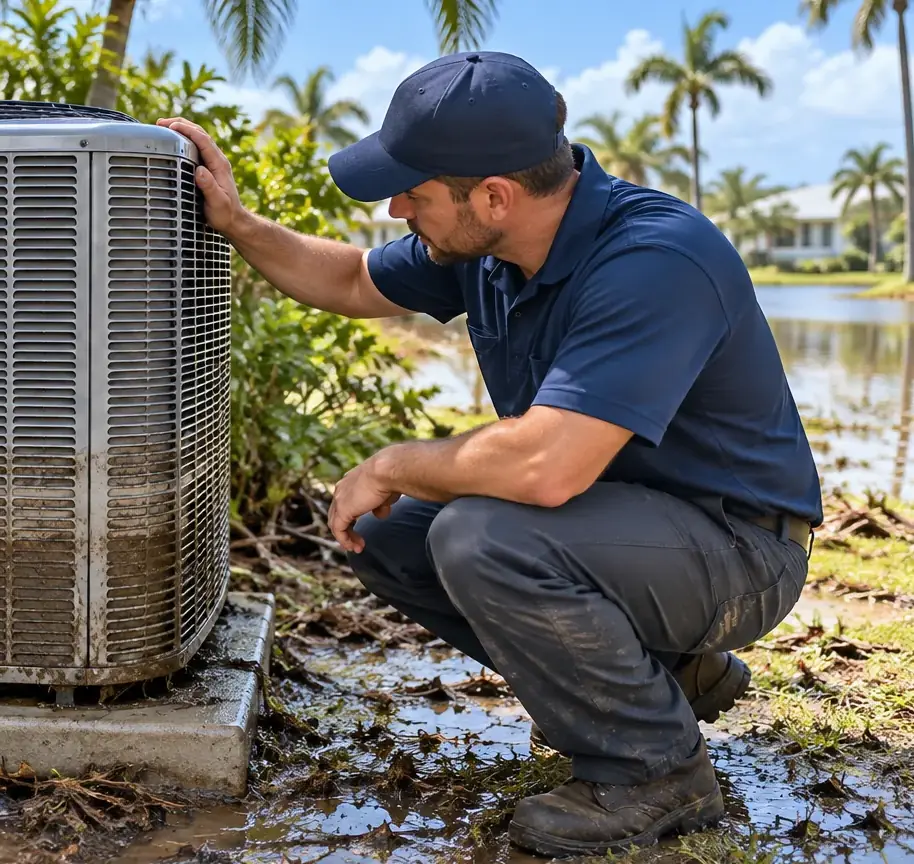
This is the most important thing in this guide. If your AC was underwater, leave it off, even if the water is gone and the unit looks perfectly fine.
A flooded unit can look normal on the outside while moisture, mud and corrosion sit inside the electrical components. Turning it back on too soon can damage the system further or create a safety hazard.
Instead:
- Keep the thermostat and breakers off.
- Don't spray the unit with a hose or remove its panels.
- Have a licensed HVAC technician inspect the system before it's turned back on.
Document the Damage for Insurance
Before anything gets cleaned up or repaired, take photos. They can help if you file a claim.
- The waterline on the outdoor unit, and on any nearby walls or fences
- Any visible debris, mud or damage
- The equipment's nameplate, the label showing the model and serial number
Flood damage is often covered by a separate flood policy rather than standard homeowners insurance. Your insurance agent can tell you what your policy includes.
Can a Flooded AC Be Repaired?
Sometimes. It depends on how high the water got, how long it stayed, and whether it was saltwater. Some units can be cleaned and have damaged parts repaired. Others, especially those that were fully submerged or sat in saltwater, may need to be replaced.
There's no way to know for sure without an inspection. A good technician will check the system, explain what they find, and give you clear options so you can decide what makes sense for your home.
What About the Indoor Unit and Ductwork?
If water got inside your home or garage, check where your indoor equipment sits. Air handlers in garages or on the ground floor can be damaged the same way the outdoor unit can. Ductwork that sat in floodwater can hold moisture and contaminants, which can lead to mold and poor indoor air quality. Have these checked as part of the same inspection.
Flood Safety Do's and Don'ts
Do
- Turn the thermostat off if water is approaching your outdoor unit.
- Shut off the AC breakers only if the panel area is dry and safe.
- Photograph the waterline and any damage.
- Get a professional inspection before restarting a flooded system.
Don't
- Turn off your AC just because of heavy rain. Rain alone isn't the problem.
- Walk through standing water to reach your equipment.
- Touch a breaker panel that's wet or in a flooded area.
- Restart a flooded AC because it looks fine.
Frequently Asked Questions
Should I turn off my AC during heavy rain?
No. Outdoor units are built to handle rain. The time to turn it off is when floodwater is rising toward the unit.
My AC was underwater but seems fine. Can I turn it on?
Not yet. Moisture and debris can stay inside the electrical parts even when the outside looks dry. Have a licensed technician inspect it first.
How long should I wait before turning my AC back on after a flood?
There's no safe waiting period that replaces an inspection. A flooded system should stay off until a technician confirms it's safe to run.
Does saltwater flooding make a difference?
Yes. Saltwater speeds up corrosion, so units exposed to storm surge or tidal flooding are more likely to need major repairs or replacement.
Will my insurance cover a flooded AC?
It depends on your coverage. Flood damage is often handled under a separate flood policy. Photos of the waterline and the equipment's nameplate will help with any claim.
We're Here for You
Rocket Cooling is a family-owned company, and our teams live and work in the same communities you do, from LaBelle, Fort Myers and Naples to the Treasure Coast, West Palm Beach and the Florida Keys. If flooding reached your AC, we'll inspect it, explain what we find, and help you get your home comfortable again once it's safe.
Prefer to talk to someone? Contact your local team.